
Regional Western Australia holds some of the nation’s most significant built heritage, yet the specialised expertise required to protect it remains widely misunderstood. Whether you own a century-old pastoral homestead, manage a heritage-listed civic building, or are planning an adaptive reuse project, understanding what professional heritage building conservation services actually deliver is essential before committing to any course of action.
Heritage conservation is far more than sympathetic renovation. It operates within a defined regulatory framework, draws on internationally recognised principles like the Burra Charter, and demands professionals who can balance original design intent with modern compliance requirements. The Heritage Act 2018 (WA) governs what is permissible, while long-term financial sustainability shapes what is practical.
This analysis walks through the full scope of heritage conservation in regional WA. You will gain a clear understanding of the regulatory landscape, the core professional deliverables you should expect, how adaptive reuse extends a building’s viable life, and how sustainability principles are being integrated into contemporary conservation practice. By the end, you will have the knowledge needed to take confident, informed steps with your heritage property.
What Heritage Building Conservation Actually Involves
Under the Heritage Act 2018 (WA), “conservation” has a precise statutory definition that most property owners have never read. Section 4 identifies six distinct actions: maintenance, preservation, restoration, reconstruction, adaptation, and interpretation. Each is appropriate in different circumstances, and each carries different regulatory implications for what approvals are required and what professional documentation must support them.
This definition matters because it directly contradicts the most common misconception about heritage conservation: that it means freezing a building in time. Adaptation and interpretation are explicitly recognised conservation actions under the Act. A heritage building can be repurposed, extended, or reinterpreted for contemporary use while fully retaining its cultural heritage significance and associations. The Act’s stated objects reinforce this, encouraging and facilitating the conservation, continuing use, development and adaptive reuse of heritage places.
Significance First, Actions Second
Before any of those six actions can be appropriately chosen, the question of significance must be answered. The Burra Charter, Australia’s foundational conservation methodology administered through Australia ICOMOS, establishes that all conservation decisions must flow from a systematic significance assessment. You cannot determine what to preserve, restore, or adapt until you understand what matters about the place and why. This is not procedural formality; it is the analytical foundation that separates principled conservation from guesswork.
The Heritage Act 2018 (WA) operationalises this at the regulatory level. Section 52 requires the Heritage Council to adopt a formal statement of cultural heritage significance for each place on the State Register, meaning significance assessment is both a professional obligation and a statutory one.
Conservation as a Design Discipline
Heritage conservation is not routine building work with older materials. RAIA Heritage Policy affirms that conservation work requires registered architects with specialist heritage knowledge, design skills, and experience of construction and compliance, a combination that distinguishes a skilled heritage architect from a general building contractor. This creative dimension is also why the process of working within constraints produces better architecture: heritage conservation demands rigorous problem-solving within a framework of significance, not despite it.
That framework includes the least-possible-change principle, recognised in professional conservation standards across WA local government frameworks. Alterations must involve minimal impact to significant fabric. Where new work is introduced, it must remain visually distinguishable from original material rather than mimicking it. The principle is widely applied by WA local governments and shapes how proposed alterations are assessed and justified.
The Regulatory Framework for Heritage Properties in Regional WA
Understanding the conservation principles is one matter; navigating the legal framework that governs what you can actually do to a heritage place is another entirely.
The Heritage Act 2018 (WA) is the principal legislation governing heritage conservation across Western Australia. Part 1 commenced on 18 September 2018, with Parts 2 through 15 proclaimed progressively thereafter. It replaced the Heritage of Western Australia Act 1990, introducing streamlined approval processes, enhanced protections, and greater transparency in Heritage Council decision-making.
Two Listing Registers, Two Sets of Obligations
The State Register of Heritage Places, administered by the Heritage Council of WA, provides the highest level of statutory protection in the state and includes more than 1,300 places across Western Australia. Alongside it, local governments maintain separate Local Heritage Surveys, sometimes called Municipal Inventories, that capture locally significant places not necessarily on the State Register.
These are not interchangeable. A place can appear on one, the other, or both, and each listing triggers distinct consent requirements. State-registered places involve the Heritage Council in assessing proposed works, and the requirements depend on the nature of those works. Locally listed places are subject to local government assessment under planning scheme provisions. Property owners who assume a single approval covers all obligations regularly encounter costly delays.
Regional Approval Pathways Are Not Metropolitan Pathways
In metropolitan Perth, local governments typically have dedicated heritage officers with specialist knowledge of assessment workflows. In regional WA, that in-house expertise is often limited or absent. Council staff may be managing heritage applications alongside a wide range of other planning functions, with less familiarity with Heritage Act 2018 processes.
This makes the role of a qualified heritage architect more critical in regional settings, not less. Preparing well-documented applications, anticipating referral requirements, and communicating clearly with both Heritage Council and regional local government officers reduces assessment time and the likelihood of requests for further information. If you are thinking through the broader implications of working on an existing building before engaging that process, the considerations a WA homeowner should work through before renovating are a useful starting point.
The Cost of Proceeding Without Advice
Unapproved works to a heritage place carry genuine legal risk under the Heritage Act 2018 (WA). Enforcement action can require rectification at the owner’s expense, and rectification of heritage fabric is rarely straightforward or cheap.
The most effective way to avoid this outcome is early engagement with a qualified heritage professional. Mapping which listings apply to your property and which approval pathways those listings activate, before any works begin, is not bureaucratic caution; it is fundamental project planning.
Core Professional Deliverables in Heritage Conservation
Once the applicable listings and approval triggers are mapped, the next question is: which professional documents does your project actually require?
Statement of Heritage Significance
This is the prerequisite document for every substantive heritage project. Drawing on the Burra Charter’s practice notes, it systematically assesses and articulates a place’s historical, aesthetic, scientific, and social values. No conservation management strategy can be responsibly developed without it, because the significance assessment defines what must be protected and what can be changed.
Conservation Management Plan
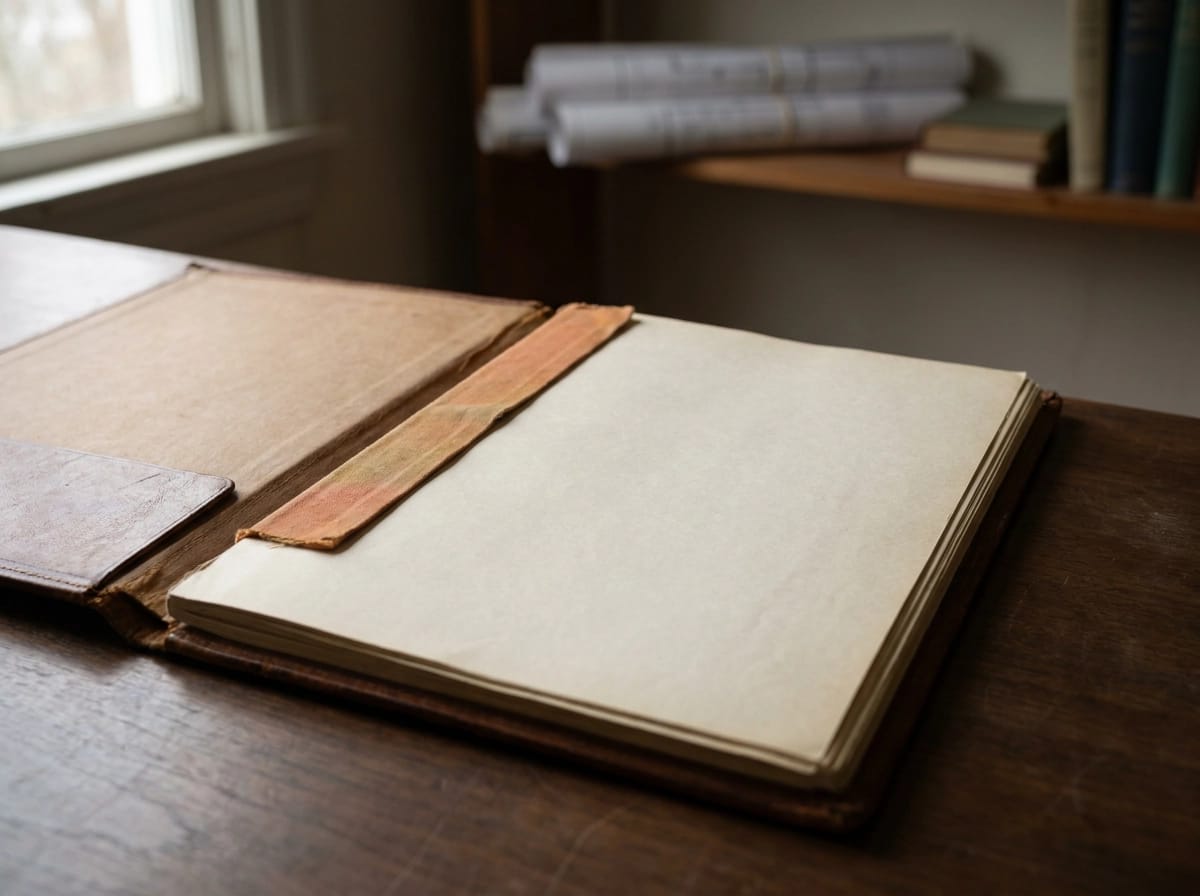
A Conservation Management Plan (CMP) builds directly on the significance assessment to establish binding policies for all future decisions affecting the place, from routine maintenance through to major adaptation works. Heritage Council of WA, local governments, and heritage grant funding bodies may require a CMP for complex projects. It is the primary professional deliverable in heritage conservation, and its scope is substantial: a well-prepared CMP addresses conservation philosophy, significance grading of individual elements, maintenance schedules, and criteria for assessing future proposals.
Heritage Impact Statement
When proposed works to a heritage place trigger referral to Heritage Council or require assessment by a local government, a Heritage Impact Statement (HIS) is typically required. Its function is specific: to evaluate how the proposed change affects the identified significant fabric and values, and to demonstrate that the least-possible-change principle has been applied. An HIS is not a design document; it is an evidence-based argument that the proposed works represent the minimum intervention necessary to achieve the project’s legitimate objectives.
Design Guidelines Compliance Documentation
For alterations and additions, compliance documentation demonstrates how new work sits in relationship to significant fabric. Across WA local governments, the operative principle is that new work must remain easily distinguishable from significant fabric rather than copying it, while sitting compatibly within the broader place. This is a principle embedded in heritage design guidelines applied by many councils. Note that heritage landscapes carry their own compliance considerations, distinct from built fabric assessments. For projects where grounds and gardens are heritage-listed, the analytical approach described in resources like our practical guide to landscape architecture for WA property owners becomes directly relevant.
Navigating the Documents
Most property owners and community organisations are unaware these deliverables exist as distinct professional products, each with a specific regulatory function. Part of a heritage architect’s role is identifying which documents a given project scope requires, in what sequence, and what level of detail each needs. Commissioning documents unnecessarily wastes time and cost; omitting required documents creates approval risk. Clear professional guidance at the outset is how both outcomes are avoided.
Adaptive Reuse and the Long-Term Viability of Heritage Buildings
Understanding the long-term financial and functional realities of heritage ownership is equally important before committing to a conservation pathway.
The RAIA Heritage Policy confirms that most buildings require significant re-investment every 20 to 30 years to maintain viability and function. Heritage ownership is not a single capital event; it is a stewardship commitment across decades. Owners who plan for this cycle, budgeting for periodic works rather than reacting to deterioration, are far better positioned to protect both the building and their investment.
Adaptive reuse sits at the intersection of good conservation and good economics. Repurposing a heritage building for a viable new use, while retaining its significant fabric and values, is not a compromise of conservation principles; it is recognised conservation practice endorsed by both the legislation and the profession.
The technical complexity involved should not be underestimated. Meeting National Construction Code requirements for accessibility, fire safety, and structural performance inside a heritage fabric requires professionals who understand the original construction logic alongside contemporary compliance obligations. Timber-framed buildings, rubble stone walls, and early concrete structures each behave differently and demand different compliance strategies. Getting this balance wrong risks either compromising heritage significance or producing a building that cannot be lawfully occupied.
Financial planning for a heritage property should account for three overlapping considerations: the 20 to 30-year reinvestment cycle, potential grant funding through State and local government heritage assistance programmes, and the long-term value that well-maintained, adapted heritage places can hold. Good architectural design pays dividends across all three, reducing lifecycle maintenance costs while lifting long-term property value.
The clearest lesson from adaptive reuse practice is straightforward: an occupied, functioning heritage building is far more likely to be properly maintained and valued than one preserved without economic or community purpose. A former wool store operating as a community arts space, a colonial-era farmhouse adapted as a regional tourism stay, a historic public hall brought back into civic use; each of these outcomes gives a building a reason to survive. Purpose sustains investment. Preservation without function is fragile. For a regional example, see our article on the heritage condition and adaptive reuse case for the Wyalkatchem Railway Barracks.
The most durable heritage conservation outcomes combine rigorous significance-led decision-making with a realistic, financially grounded plan for what the building will do next.
Integrating Sustainability into Heritage Conservation
The long-term viability argument for heritage buildings connects naturally to a broader sustainability case, one that is increasingly embedded in Australian environmental policy.
Australia’s State of the Environment 2021 Report identifies climate change as a pressure on heritage places, which points to the value of integrating environmental considerations into conservation planning. That framing is relevant: contemporary heritage conservation practice benefits from treating carbon reduction, resource efficiency, and biodiversity considerations alongside traditional preservation principles, rather than as separate concerns.
Embodied carbon makes retention the default sustainable choice. Every heritage building represents decades of accumulated material energy, the carbon already expended in producing and placing its bricks, timber, stone, or lime render. Retaining and adapting existing fabric avoids the material and energy waste associated with demolition and rebuild, a sustainability advantage that aligns with, rather than conflicts with, conservation principles. Understanding how wall, floor and roof systems in Western Australia evolved through time reinforces why this matters: the materials in many regional heritage buildings represent construction knowledge and embodied energy that simply cannot be replicated cheaply or quickly.
The least-possible-change approach that heritage practice already requires, repairing rather than replacing and minimising disturbance to existing fabric, aligns naturally with resource efficiency goals. This is a convergence of professional standards and sustainability practice, not a tension between them.
Heritage landscapes require integrated biodiversity assessment. Heritage-listed grounds, gardens, and rural settings may support significant native vegetation, habitat trees, or ecological corridors. Where a property has both heritage landscape values and ecological attributes, assessing these together, rather than sequentially, produces more coherent outcomes and reduces approval risk.
Energy efficiency upgrades are achievable without compromising significant fabric. Insulation, upgraded glazing, and improved mechanical systems can all be introduced into heritage buildings when the intervention strategy is designed by professionals who understand both conservation constraints and building science. The key considerations are whether the upgrade can be achieved without damaging original fabric and whether it is compatible with the thermal and structural behaviour of existing materials, questions a heritage architect familiar with building science can assess. A heritage architect who also understands environmental performance can identify where these upgrades are viable and how to document them for heritage approval.
Heritage Conservation Services from Office of Regional Architecture
Putting those sustainability principles into practice requires a professional who can apply them within the specific regulatory and geographic context of regional Western Australia. That is where Office of Regional Architecture operates.
A Practice with Regional Roots
Office of Regional Architecture is an architectural practice based in regional WA, offering the full spectrum of heritage conservation services: Statements of Heritage Significance, Conservation Management Plans, Heritage Impact Statements, and design and documentation for conservation and adaptive reuse works. Professional qualifications matter here because heritage conservation deliverables prepared by unqualified practitioners carry regulatory risk; Heritage Council of WA and local government planners expect documentation that meets professional standards.
Regional Context, Not Metropolitan Assumptions
The practice’s location in regional WA is a substantive professional advantage, not merely a geographic fact. Regional local governments typically carry less dedicated heritage expertise in-house than metropolitan counterparts, a reality that makes well-documented applications and proactive assessment management especially important in regional WA. The practice understands how the Heritage Act 2018 (WA) operates in these settings and how to coordinate with Heritage Council and regional council planning frameworks.
Collaboration Across All Stakeholders
Conservation outcomes that satisfy regulatory requirements but ignore community values tend to produce buildings that are technically preserved and practically abandoned. The practice works collaboratively with clients, community groups, Heritage Council, and local government throughout every project, ensuring the final conservation strategy reflects what makes a place genuinely worth conserving, not only what the legislation requires.
Sustainability Embedded, Not Added On
The practice’s established focus on carbon emissions, resource consumption, and biodiversity means that heritage projects are assessed holistically from the outset. Energy efficiency, environmental performance, and material conservation are considered alongside heritage significance criteria rather than treated as competing obligations to be negotiated later in the design process.
End-to-End Service Delivery
Whether the scope is a heritage residence transformation, a community hall requiring adaptive reuse, or a commercially significant regional building needing a Conservation Management Plan, the practice provides professional guidance from initial significance assessment through to construction documentation and approval. Clients are not handed off between consultants at critical stages; the same practice that identifies what is significant is also the practice that designs the intervention and steers it through approval.
Frequently Asked Questions About Heritage Conservation
These questions come up regularly for heritage property owners, and clear answers save time and costly missteps.
Do I need council approval for routine maintenance?
Many WA local planning frameworks include exemptions for routine works, but the scope of those exemptions varies by council and listing type. Confirming whether your proposed maintenance falls within any exemption with a heritage professional before starting is always the safest approach. Any change to materials, form, or location of fabric triggers an assessment obligation, even when the intent is purely maintenance; what looks like routine repair can cross into regulated territory without the owner realising.
What is the difference between conservation and restoration?
Conservation is the umbrella term. It covers all actions that retain cultural heritage significance, including maintenance, preservation, adaptation, and restoration. Restoration is a specific subset: it means returning a place to a known earlier state by removing later additions or reinstating missing fabric. Within heritage conservation practice, restoration carries a higher evidentiary burden than other conservation actions, it requires demonstrable justification before a heritage architect will recommend it. This distinction matters practically because a heritage architect will assess whether that threshold can be met before recommending restoration as the appropriate course of action.
How long does heritage approval take in regional WA?
There is no single answer. Timeframes depend on the significance level of the place, the complexity of proposed works, and whether Heritage Council of WA referral is required, State-registered places involve an additional assessment layer that municipal-only listings do not. Engaging a heritage architect early to prepare well-documented, complete applications is the most reliable way to reduce assessment time and avoid requests for further information, which can add weeks or months to a project programme.
Can a heritage building be upgraded for energy efficiency?
Yes, in most cases. The key conditions are reversibility, compatibility with original materials, and targeting non-significant fabric wherever possible. Insulation, upgraded glazing, and modern mechanical systems can all be accommodated when the intervention strategy is designed with conservation constraints in mind. A heritage architect will identify where upgrades can be achieved without affecting significant fabric, producing outcomes that meet both energy performance goals and conservation obligations. This approach mirrors the thinking behind any careful architectural project: understanding constraints early shapes better solutions, in the same way that treating a kitchen renovation as a full architectural project produces outcomes that a joinery-first approach cannot.
Taking the Next Step with Your Heritage Property
The answers above clarify the mechanics. What follows is how to act on them.
Commission a significance assessment first. Before any works are planned, scoped, or budgeted, a professional assessment of your building’s cultural heritage significance is the essential starting point. It identifies what fabric, associations, and values must be conserved, and that understanding drives every subsequent decision. Without it, conservation work is guesswork. If you are curious about how a building’s architectural character shapes that assessment, this plain-English guide to architectural styles explains how design language connects to cultural value in terms that are directly relevant to heritage significance work.
Map your regulatory obligations before planning any changes. Confirm whether your property is on the State Register, a Local Heritage Survey, or both, each carries distinct approval obligations, and establishing this early prevents works being designed and then halted at the approval stage. (See the Regulatory Framework section above for the full picture.)
Budget for long-term stewardship, not a one-time project. Plan financially for periodic reinvestment over the life of the building, as noted above, the RAIA’s 20-to-30-year cycle is the realistic stewardship horizon. State and local government heritage grant assistance programmes can support this.
Engage a heritage architect with demonstrated regional WA experience. The Heritage Act 2018 (WA) framework, Heritage Council approval processes, and regional local government workflows require a professional who understands both the legislative requirements and the practical realities of working in regional Western Australia. A qualified heritage architect prepares the Statements of Heritage Significance, Conservation Management Plans, and Heritage Impact Statements that authorities require, and manages the coordination that moves projects through assessment efficiently.
Conclusion
Heritage building conservation in regional Western Australia demands specialist knowledge, careful planning, and a long-term commitment to stewardship. The key takeaways are clear: understanding the regulatory framework under the Heritage Act 2018 (WA) is essential; professional documentation including Conservation Management Plans and Heritage Impact Statements is non-negotiable; adaptive reuse and sustainability integration can extend a building’s viability for generations; and financial planning must account for reinvestment cycles across decades of ownership.
These are not obstacles. They are the foundations of responsible heritage ownership that protects community identity and long-term property value.
The right professional partner makes this process navigable. Office of Regional Architecture brings demonstrated regional WA experience to every stage of the conservation process. Contact the practice today to begin a conversation about your heritage property and what its future can look like.