
Few heritage sites in regional Western Australia carry the quiet weight of the Wyalkatchem Railway Barracks. Sitting in a small Wheatbelt town roughly 190 kilometres northeast of Perth, these timber structures represent something increasingly rare: early 20th-century railway worker accommodation that has survived largely intact, in the same configuration the railways left behind. That kind of continuity is not accidental, and it is not insignificant.
This article looks at what the Wyalkatchem Railway Barracks are, what they mean, and what their future might reasonably hold. It draws on the site’s layered construction history from 1910 to the 1956 modifications, its two-tier heritage classification, and the 2003 and 2025 Conservation Management Plans, and works through the gap between physical deterioration and strong heritage integrity. It also examines the council lease model as a pathway for adaptive reuse, and what this site demands of regional heritage practice in Western Australia. Readers will come away with a clearer understanding of how heritage assessments are applied, where they fall short, and why sites like this one deserve more than a holding pattern.
A Rare Survivor in the WA Wheatbelt
Wyalkatchem is a small Wheatbelt town with a population of just 358 people at the 2021 Census. That demographic reality sharpens the significance of what survives here: a largely intact railway worker accommodation complex, still in the configuration left by the railways, in a town where resources for heritage stewardship are inherently limited.
The Wyalkatchem Railway Barracks are formally documented as “a rare example of a barracks kept in the same configuration as left by the railways”, making them one of the few remaining intact examples of a 1910s railway barracks in the Wheatbelt, as the 2025 CMP also records. Comparable railway worker accommodation has, in many places, been demolished, sold off, or so thoroughly altered that its original character is difficult to recover.
The town’s founding and the barracks’ history are inseparable. The railway line from Dowerin opened in February 1911, and the barracks arrived that same year, relocated from Korrelocking. Wyalkatchem did not exist in any meaningful sense before the railway reached it. The accommodation complex was not a later addition to an established town; it was part of the original infrastructure that made settlement viable at all.
That history gives the site a dual significance. It is a tangible record of how labour was organised and housed during WA’s Wheatbelt expansion, and it reflects the broader pattern of rail-driven regional settlement that shaped the landscape across this part of the state during the early twentieth century.
Why this complex survived when so many did not is not a simple question. The answer lies in the physical decisions made across more than a century of use, modification, and change of ownership, each of which either preserved or eroded what came before.
Historical Layers: From 1910 Construction to 1956 Modifications
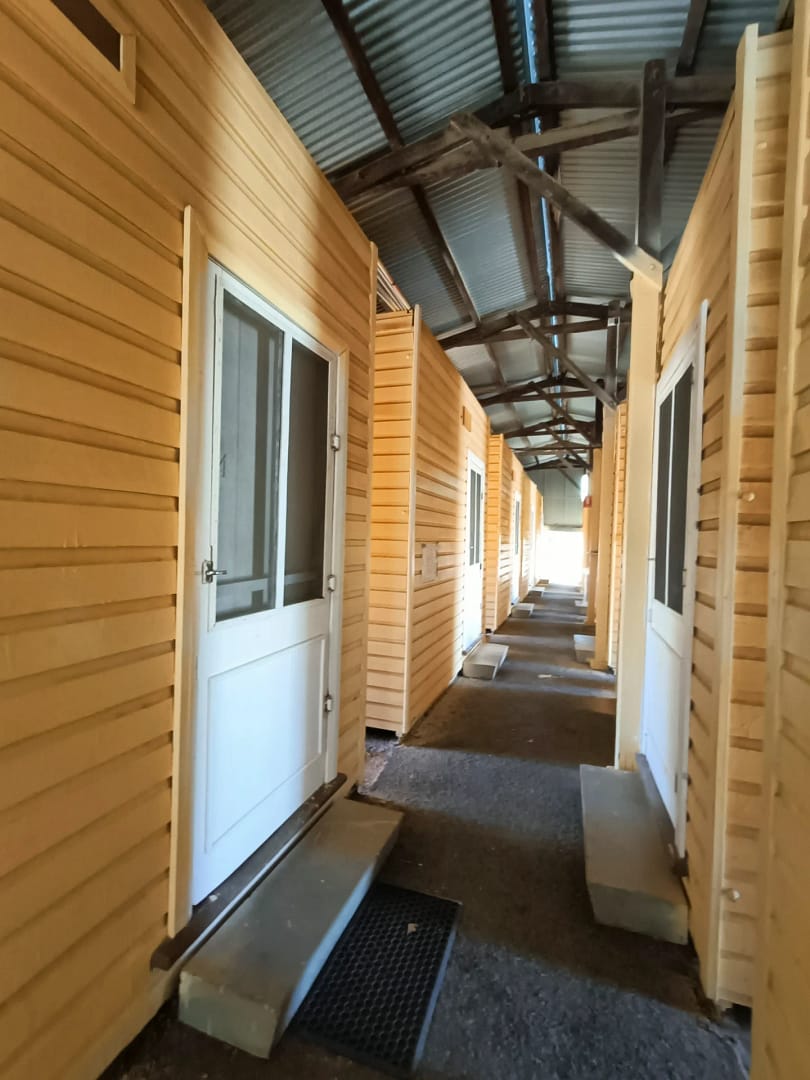
Tracing the physical history of the barracks reveals a structure assembled across several generations, not built once and left alone.
Constructed in 1910 and relocated to Wyalkatchem in 1911 as the railway arrived from Dowerin, the barracks were part of the town’s founding infrastructure from day one.
The relocation itself speaks to how railways managed built assets. Buildings were not fixed monuments; they were moveable capital, repositioned wherever operational need dictated. Moving an entire accommodation complex from Korrelocking to a new terminus was consistent with departmental practice rather than an exception.
Material construction reinforced that pragmatic outlook. Timber-framed walls clad in weatherboards, with corrugated iron roofing, were the government standard for worker accommodation across this period. These materials were fast to procure, straightforward to erect, and could be dismantled and relocated, exactly as occurred here. The CMP notes that each cabin is still mounted on railway lines set on concrete footings, a reminder of how readily these buildings were meant to be moved. Permanence was never the design intent.
Modifications in 1919 (two cabins added and the kitchen enlarged), 1921 (further additions and reconfiguration) and 1956 added further layers. The 1956 phase is particularly notable: four additional cabins were relocated to the site from Merredin, repeating the same asset-transfer logic used in 1911. Each intervention reflects a distinct period of railway operations and accommodation expectations, producing a composite structure that reads as a cumulative record rather than a single design statement.
For those working in heritage architectural practice, this layered physical fabric is precisely what makes careful, evidence-based assessment essential before any conservation intervention begins.
Understanding the Two-Tier Heritage Classification
That physical complexity sits within an equally layered heritage framework, and understanding both tiers is essential before any intervention is scoped.
The Wyalkatchem Railway and CBH Precinct was registered on the State Register of Heritage Places on 4 November 2005. inHerit also records the precinct as Category 1 on the local Municipal Inventory. It is the State Register listing that carries statutory weight: any proposed demolition, relocation, subdivision, or alteration must be assessed for its effect on the place’s cultural heritage values. The precinct groups seven places on both sides of Grace Street, including the barracks, the former CBH wheat bin, the railway station, the station master’s house, the goods shed, the loading ramp and crane, and the lever frame.
The barracks themselves carry a separate, lower classification. Recorded in the inHerit database as Category 5 under the Municipal Inventory, with that classification adopted on 18 March 2003, they are recognised at local government level rather than through an individual State Register entry. inHerit’s description of Category 5 refers to a “historic site without built features”, an awkward fit for an extant complex of buildings, and one that suggests the local classification undersells the place. A Municipal Inventory category carries none of the statutory protections that attach to State Register listing.
This two-tier arrangement has direct practical consequences. The precinct’s State Register listing brings stronger statutory protections and may strengthen the site’s case for state heritage funding and conservation support programs. The barracks sit within that umbrella as a child place in the inHerit hierarchy, meaning they benefit indirectly from precinct-level protections without carrying equivalent individual status. Council and community stakeholders should actively pursue the funding advantages that State Register precinct listing may enable, rather than treating the barracks’ lower individual classification as a ceiling.
For architects and heritage practitioners, the classification tier governing a proposed intervention determines the approvals pathway. Works affecting the broader precinct require assessment against State Register criteria and a greater degree of Heritage Council involvement. Much as renovating an existing home demands clarity on council approvals before committing to a design, any intervention at Wyalkatchem demands clarity on which framework applies before documentation is prepared.
Condition Versus Integrity: A Critical Distinction
Beyond classification tier, the inHerit database delivers a more immediate diagnostic: the barracks are recorded as being in poor physical condition yet retaining a good degree of integrity and authenticity, described as “generally as left by the railway.” The 2025 CMP assessment is more nuanced. It rates the place in fair condition overall, with a high degree of integrity and moderate to high authenticity, but with poor localised areas, notably the weathered west walls and the two southernmost cabins. Either way, the pairing is not a contradiction; it is a call to action.
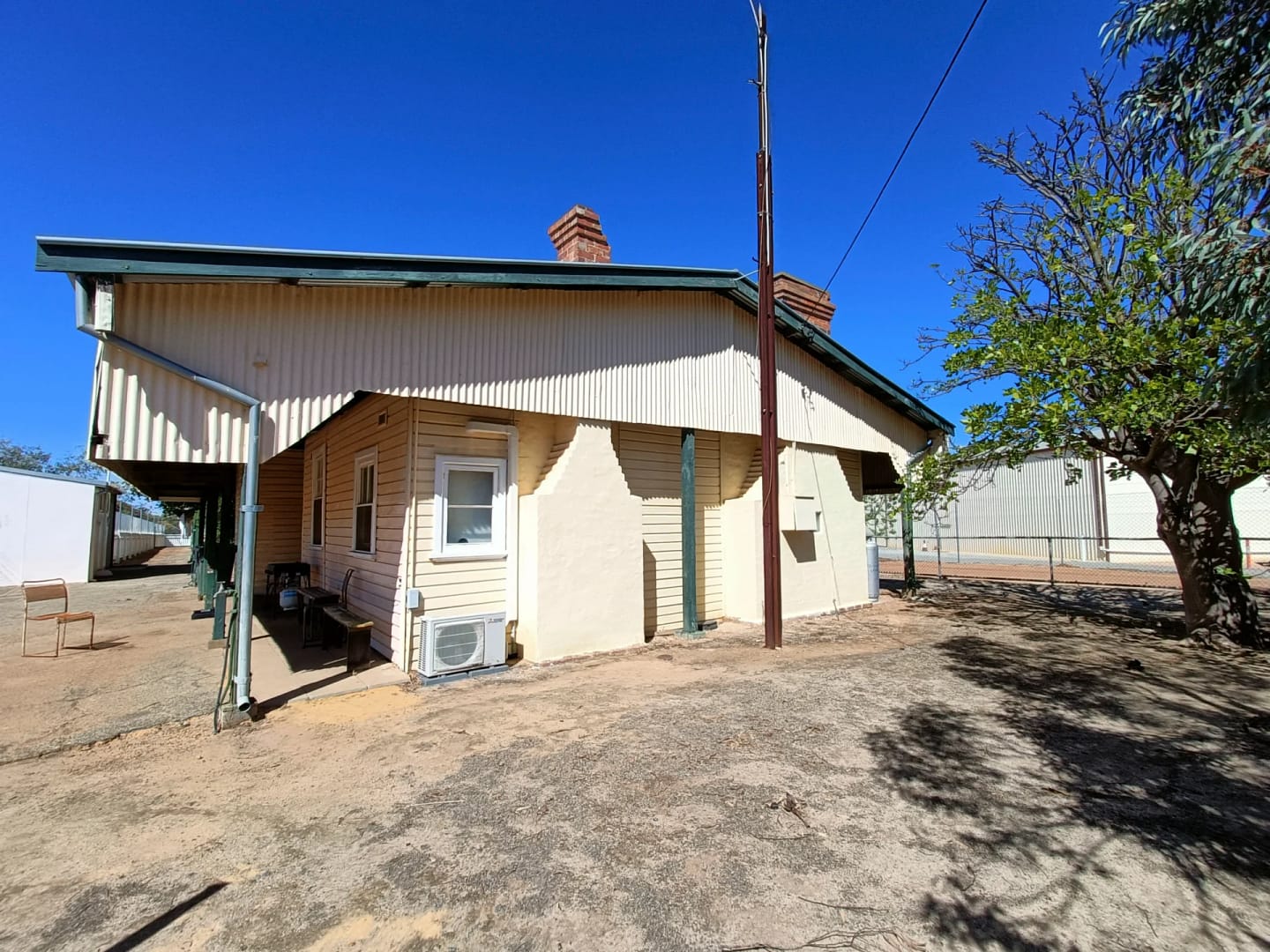
The distinction between condition and integrity is one of the most consequential in heritage assessment practice. Condition refers to the current state of materials: structural deterioration, weathering, moisture ingress, and the accumulated effects of deferred maintenance. It describes what is happening to the fabric, not what has been lost. Good integrity, by contrast, confirms that the original configuration, spatial relationships, and character-defining features remain largely unaltered. At Wyalkatchem, the spatial authenticity that makes the barracks rare is still present, even as the materials that carry it are under stress. The 2025 CMP identifies moisture damage to external timber columns, inadequate ground drainage and resulting site erosion, past termite activity and some settlement as the main pressures.
This distinction drives intervention strategy directly. A site with poor condition but compromised integrity faces a much harder conservation argument. A site like this one, where the authenticity survives, is a candidate for stabilisation and conservation rather than demolition or substantial alteration. The problem an architect must solve here is precisely how to arrest deterioration without disturbing the qualities that justify the effort.
Timber structures in the WA Wheatbelt face compounding deterioration pressures: biological, climatic, and the long-term effects of maintenance that has simply not happened. None of these is irreversible on its own. Together and unchecked, they can be. Each is addressable through heritage-sensitive methods, provided intervention occurs before condition crosses from poor into critical.
The window is open. The question is whether it stays that way.
From the 2003 Conservation Management Plan to the 2025 Update
That urgency around deteriorating timber fabric makes the planning gap all the more consequential.
The original Conservation Management Plan was prepared in April 2003 by Laura Gray (Heritage & Conservation Consultant) in association with Irene Sauman (Historian), and catalogued in the State Heritage Office library as document ID 7381. It provided the foundational heritage assessment for the Wyalkatchem Railway Barracks.
More than two decades on, the Shire of Wyalkatchem commissioned the Office of Regional Architecture (ORA) to review and update the CMP to reflect the existing condition of the Place. That update was completed in April 2025, funded by the Heritage Council’s 2024–25 Heritage Grants Program — a significant step in bridging the long gap between the original assessment and the site’s current state.
For architects, council officers, and heritage practitioners attempting to scope intervention needs, this updated CMP is now the baseline document to work from. The gap that made evidence-based conservation scoping difficult for over two decades has been addressed. The practical question now shifts from “what do we know” to “what do we do next”, and the updated plan provides the foundation to answer it. What remains uncertain is how the recommended works will be funded and staged, which makes moving from plan to delivery an immediate priority rather than a future consideration.
Built from timber with corrugated iron roofing, these rare structures retain a good degree of integrity despite localised deterioration. Delivering the updated CMP’s recommendations calls for practitioners with heritage accreditation and direct experience of WA Wheatbelt building conditions. The work requires both technical fluency in timber pathology and working knowledge of the approvals frameworks governing State Register precinct sites, skills that are not interchangeable with general construction or project management capabilities.
The Council Lease Model and the Promise of Adaptive Reuse
Beyond updating the conservation plan, there is the question of who carries responsibility for the barracks’ future. The council lease model answers that directly.
The barracks’ current use is classified as “social/recreational” in the heritage record, and community stewardship is the most viable governance pathway available. The land is owned by the Western Australian Government Railways Commission and has been leased to the Shire since 2003 at a peppercorn rent, with the barracks used as short-term accommodation and maintained by the Shire. The CMP itself treats the continuation of appropriate, viable functions as critical to the place’s ongoing conservation, so council stewardship at Wyalkatchem is not merely pragmatic but aligned with the plan’s own conservation logic.
That stewardship unlocks genuine adaptive reuse possibilities. The most viable directions include interpretive tourism facilities drawing on the broader Wyalkatchem Railway and CBH Precinct experience, continued short-stay accommodation for heritage visitors (a role the barracks already play), artist residencies, or community meeting spaces. Each of these uses can generate the modest but consistent activity that heritage structures need to justify ongoing maintenance investment.
Wyalkatchem’s record of civic engagement reinforces this potential. National Tidy Towns recognition in 2003 signals a community with demonstrated capacity for coordinated place-making, not merely aspiration.
The conservation duty remains non-negotiable, and the CMP itself requires that any current or future lease arrangements recognise the need to conserve the place. Any adaptive reuse programme must preserve the configuration and material authenticity that give the barracks their heritage value. This is where good architectural investment pays off: conservation-led design can reduce lifecycle costs and protect the asset’s long-term cultural and financial value.
For other Wheatbelt towns managing comparable railway infrastructure without private capital, Wyalkatchem’s council lease model offers a replicable framework, provided appropriately accredited architectural and planning expertise guides the transition from heritage liability to community asset.
Updated CMP: Conservation Actions by Priority
The 2025 updated CMP, reviewed and updated by ORA, sets out a staged programme of works across three timeframes. These recommendations reflect the current condition of the Place and supersede the 2003 plan’s priorities.
Immediate Actions (0–2 Years)
These works address the most urgent structural and weatherproofing vulnerabilities:
- Restore and/or reconstruct damaged timber posts using splice, flushed bolt or timber dowel joints (refer to appendix for typical details). Reconstruct concrete footings, reinstate downpipes and replace damaged downpipes with brackets to timber posts.
- Provide curved apron flashings between the curved walkway roof and high-level cladding to fully weatherproof the junction, and replace weather-damaged timber members under the roof junction.
- Replace damaged retaining walls on both sides of the ramp leading to the southernmost 1956 cabins; replace the existing steep non-compliant ramp with concrete or masonry steps with handrails.
- Restore external window frames and other painted detailing as required, and prepare for painting.
- Consult a heritage architect to modify existing fencing at the entrance to provide a more welcoming landscaped entry, including re-grading site levels and/or providing drainage to ensure stormwater runs away from the dining/kitchen cabin.
- Inspect and restore or reconstruct any damaged external weatherboards throughout, with particular attention to the west walls.
- Instigate immediate action on recommendations pertinent to the long-term viability of the Place.
- Ensure that general maintenance is undertaken to a comprehensive schedule on a regular basis.
Medium-Term Actions (2–5 Years)
- Construct perimeter drainage that maximises runoff away from the building without impacting the surrounding perimeter banks.
- Remove damaged asbestos sheets and battens throughout in accordance with all relevant health, safety and statutory requirements, and reconstruct using Hardiflex sheeting.
- Restore interior timber walls, ceilings and floorboards as required throughout.
- Restore interior timber detailing.
- Restore brick chimneys — investigate opportunities to remove paint from face brickwork.
- Undertake paint scrapings to document the original colour schemes of the Place; design the colour scheme with full consideration of those original schemes. Consult a conservation consultant and employ an appropriately qualified painter.
- Paint the interior after paint scrapes and consultation with a conservation consultant.
Long-Term Actions (5–10 Years)
- Consult a heritage architect with landscape expertise to improve the site landscape and external spaces.
- Restore bitumen surfaces.
- Upgrade kitchen, toilet and bathroom facilities.
What This Site Demands of Regional Heritage Practice
The promise of adaptive reuse only holds if the underlying structure is sound enough to receive it. That is where the Wyalkatchem Railway Barracks currently sit: authentic fabric and largely intact configuration on one side, and physical deterioration on the other, with an updated conservation plan now available to guide the response. The intervention window is narrowing.
Three actions are immediately defensible. First, resource and begin the immediate (0–2 year) works set out in the 2025 CMP, which address timber posts, roof junctions, drainage and weatherproofing. Second, adopt the 2025 CMP as the reference document for all approvals and design work, in place of the 2003 plan. Third, develop an adaptive reuse brief directly aligned with the council’s stewardship objectives, so any architectural scope is shaped by heritage obligations from the outset rather than retrofitted to them.
Competent heritage practice here requires more than general conservation knowledge. Understanding how building systems in regional WA respond to climate conditions is directly applicable when specifying repair and stabilisation works, and the applicable classification tier (State Register precinct versus Category 5 Municipal Inventory listing) governs which approvals pathway applies. Interventions must be reversible and materially appropriate; neither condition is negotiable on a registered State heritage precinct.
Office of Regional Architecture, which reviewed and updated the CMP in 2025, brings accredited heritage expertise, direct experience with WA’s classification framework, and the regional knowledge that dispersed Wheatbelt sites specifically require.
For any council, heritage body, or community group managing comparable railway infrastructure, the barracks present both a warning about what deferred maintenance costs and a practical model for what disciplined public stewardship of rare heritage assets can deliver.
Conclusion
The Wyalkatchem Railway Barracks represent something increasingly scarce: a largely intact early twentieth-century timber structure with documented heritage significance and an active stewardship framework already in place. The key takeaways are clear. Heritage classification creates obligations, not just recognition. Condition and integrity must be assessed separately before any intervention is scoped. And adaptive reuse succeeds only when heritage requirements shape the brief from the beginning, not as an afterthought.
For councils and community groups managing comparable assets, the path forward requires accredited expertise, regional construction knowledge, and genuine familiarity with WA’s approvals framework.
The barracks can be stabilised, activated, and preserved for the next generation of users. That outcome depends on acting before deferred maintenance compounds further. If your organisation is responsible for a registered heritage site in regional WA, now is the right time to engage qualified heritage advice.