
Most owners who commission a heritage report in Western Australia do so after a council or funding body has asked for one. That is already too late to ask the only question that matters: which document is actually required? The answer depends on the trigger, and the trigger is usually listed in a local planning policy, a State register entry, a development application condition, or a grant agreement. Get it wrong and you pay for scope you do not need, or you redo work that never satisfied the decision-maker.
This post explains the difference between a heritage assessment, a heritage impact statement, and a conservation plan. More importantly, it shows which one the local government, the State Heritage Office, or a funding body will ask for. We work through why the trigger comes before the document and the specific triggers that decide your path: local heritage surveys and lists, heritage areas and adjacent places, State Register referrals, development applications, demolition, funding conditions, protection orders, and Aboriginal heritage. A decision matrix and a guide to what heritage consultants actually charge will help you match the trigger to the right document, author, and cost.
Why the Trigger Comes Before the Document
Owners call a provider before knowing the document they need. The trigger comes first: who is asking, under what power, for what decision. That sets the document, its author and fee.
Three trigger families dominate: local planning (heritage list, local heritage survey place, heritage area), state level (State Register and State Heritage Council referral), and third-party conditions (grant deeds, protection orders, heritage agreements).
Get it wrong and you pay twice: unneeded scope, or work a decision-maker rejects.
Confirm the exact listing and clause first: councils use ‘State Register’ and ‘State Heritage List’ interchangeably, so use one term throughout.
Aboriginal heritage is separate, under the Aboriginal Heritage Act 1972 and the Aboriginal Cultural Heritage Act 2021, which an impact statement does not cover. Our heritage conservation services address built heritage.
The Three Heritage Documents, Defined
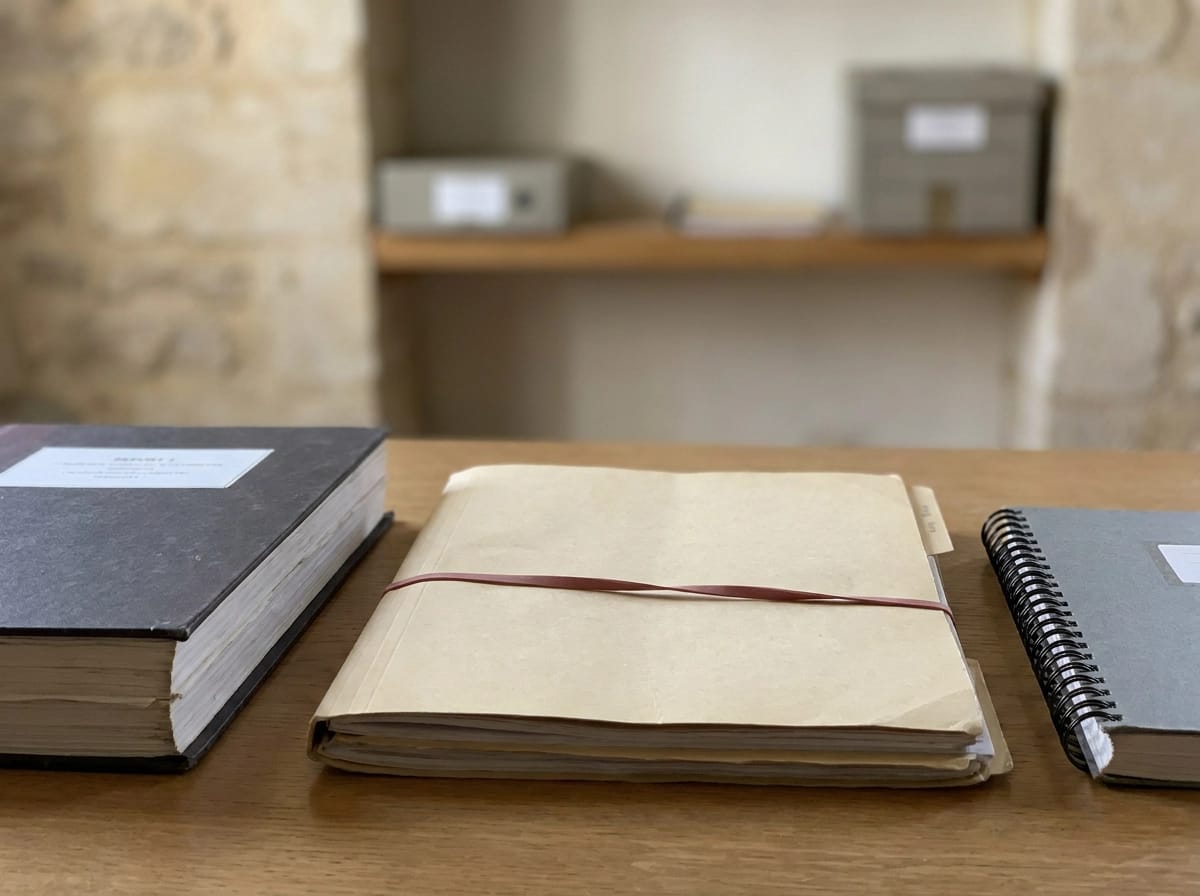
The three documents do distinct jobs. A heritage assessment, or heritage significance assessment, records what matters about a place, weighing documentary and physical evidence against recognised criteria and identifying the fabric carrying significance. A heritage impact statement tests one proposal against that significance, explaining affected fabric, the design response and whether the impact is acceptable to the decision-maker. A conservation plan is largest, setting out significance before management policies and actions over time: maintenance, change, interpretation and record-keeping. They are not interchangeable. An assessment describes, an impact statement argues, a conservation plan governs. Asking one to do another’s job is why owners redo work. Each demands a different author and fee range, so read the trigger before briefing. Knowing the skills a competent architect brings helps you brief correctly.
Heritage Assessment: Documenting What Matters
Unlike the impact statement, an assessment makes no case for change. It documents cultural significance and the fabric carrying it: the evidence base, not an argument about a proposal.
The Heritage Act 2018 replaced the Heritage of Western Australia Act 1990; Local Heritage Surveys sit under s104. Listing follows evaluation of documentary and physical evidence, so the assessment supports that evaluation.
Triggers include a council inventory review, a new listing proposal, or pre-purchase due diligence. Victoria Park’s 2021 review of its 2000 Municipal Heritage Inventory was its first major review since.
A heritage consultant or heritage architect with conservation experience prepares it; check project examples, not the title. It approves nothing, so a development normally needs an impact statement too. Our architectural services for Australian projects cover heritage work.
Heritage Impact Statement: Arguing the Proposal
That is where it takes over. It tests a specific proposal against a place’s cultural significance, showing which fabric is affected and how the design responds. Councils and the State Heritage Council ask for it most often. Some policies place that duty on the landowner, requiring written identification of existing fabric and a design response.
Policies are performance-based: the City of Vincent anchors its heritage policy in the Burra Charter (2013), so an impact statement there must argue performance against significance, not recite checklist compliance.
Engage your project architect alongside a heritage specialist, so the statement reflects the actual design, including landscape scope such as landscape construction as living infrastructure. Commission it with concept design; arriving after final drawings means recommendations cannot be built in without rework.
Conservation Plan: Managing the Place Long Term
A conservation plan is the long-term management framework for a place: significance, then policies and actions for maintenance, change, interpretation and archival recording. It follows the Burra Charter process, so it answers how a place should be managed over decades, not whether one project can proceed.
Triggers include larger or complex sites, multiple owners or uses, funding bodies that require a conservation management plan, and places under a heritage agreement. Scale, structure count, documentary research depth and stakeholder consultation drive cost, as large complexes such as the Wyalkatchem Railway Barracks show.
For a single dwelling extension on a Local Heritage Survey place, it is overkill. Councils generally do not request one, so buying it is scope you did not need.
The Triggers That Decide Which Document You Need
Four questions resolve most cases: which list or area applies, is there a proposal or only a listing event, who decides (council, State Heritage Council or funding body), and is it one project or ongoing management?
Councils draft their own policies with council-specific triggers; Vincent notes SPP 3.5 and related guidance do not address its specific places, so requirements vary.
One project can trigger two documents: a State Register referral plus a grant condition; the strictest governs scope.
Confirm listing status and the policy clause in writing before briefing a heritage consultant. The trigger, not the title, defines the deliverable and fee.
The Heritage Act 2018 shift, with statutory Local Heritage Surveys and March 2019 draft guidelines, means older ‘municipal inventory’ advice may mislead when renovating an existing home.
Local Triggers: Local Heritage Survey and Heritage List
Kent’s Local Planning Policy No. 1 splits Local Heritage Survey places from Heritage List places, so confirm which instrument your property sits on first.
For a Local Heritage Survey place, an application must demonstrate in writing that the proposal will not adversely affect cultural significance. Even a kitchen renovation can satisfy this with a short written statement rather than a commissioned report.
Heritage List places demand more: written documentation of existing heritage fabric and how the design responds to heritage values, closer to a heritage impact statement. An application consistent with SPP 3.5 may be decided by Planning Services; an inconsistent one goes to Council.
Labels are inconsistent: ‘heritage list’, ‘local heritage survey’, ‘municipal inventory’ and ‘heritage area’ are distinct instruments, and not every council has updated its terminology.
Heritage Areas and Adjacent Places: The Overlooked Trigger
Adjacency is its own trigger. The City of Vincent’s policy covers places on its Heritage List, in heritage areas, adjacent to listed places or areas, on the State Register, or under a protection order or heritage agreement. Beside a listed neighbour, expect council to ask how your design affects setting, streetscape or significant views.
Heritage area applications are assessed against the area’s statement of significance, not the individual site, so the document must speak to the precinct as well as the building.
Councils apply different triggers, so the neighbouring council’s policy is no guide; requirements change within a few kilometres. Request written confirmation of which provisions apply to your address before commissioning, then attach it to your heritage consultant’s brief. The same logic governs planning outdoor storage in regional WA.
State Register Places and State Heritage Council Referral
A State Register listing raises the stakes. State-listed places still require development approval and, unless an exemption applies, referral to the State Heritage Council for heritage assessment before determination. That referral runs parallel to the local planning assessment, not after it.
Under Kent’s policy, the landowner, not the council, must obtain a Heritage Impact Statement for buildings and places on the State Heritage List. Because referral adds time to the program, schedule the statement into the approval path rather than commissioning it after lodgement.
Before assuming no approval is needed, confirm two things: whether the place is on the State Register, and whether an exemption covers your proposed works. Policies use “State Register” and “State Heritage List” interchangeably; verify against official records and use one term throughout your brief.
Development Applications, Demolition and Council Determination
Beyond that referral route, the DA itself is a trigger. Your heritage document becomes an attachment, so prepare it to the council’s stated requirements, not as a standalone academic exercise.
Demolition of a Heritage List place is determined by Council, lifting both documentation expectations and political sensitivity. An application inconsistent with SPP 3.5 or the assigned significance level likewise moves from officer delegation to Council, adding time, exposure and the case for a properly argued impact statement.
Match the document to the decision-maker: officer-delegated matters often need less, while Council determinations and referrals must withstand a second decision-maker’s scrutiny.
For demolition or major alteration, budget for a heritage impact statement prepared by a heritage architect working with the design team from the start.
Funding Conditions, Protection Orders and Aboriginal Heritage
Council approval is only one source of obligation. Grant deeds impose their own: a conservation plan or conservation management plan may be required even where the council asks for nothing. Read the funding deed alongside the planning scheme; the strictest condition governs the scope you commission. Building to the lower standard is the fastest way to lose a funding milestone.
Places under a protection order or heritage agreement fall within Vincent’s policy scope and generally attract more documentation than unlisted places.
Aboriginal heritage is a separate track under the Aboriginal Heritage Act 1972 and the Aboriginal Cultural Heritage Act 2021. A heritage impact statement does not address it, so a separate assessment may be needed. If a project touches both, budget for two workstreams: different specialists, timeframes and sign-offs.
Matching the Trigger to the Document: A Decision Matrix
With the separate tracks identified, match the trigger to the document that answers it:
| Trigger | Document | Who prepares it |
|---|---|---|
| Local Heritage Survey place, no adverse impact claimed | Written statement addressing cultural significance | Your architect or a heritage consultant |
| Heritage List place or heritage area with a development application | Existing fabric documentation and the design response | A heritage architect or heritage consultant |
| State Register place with a DA and referral | Heritage impact statement able to satisfy the State Heritage Council | A specialist with conservation experience |
| Site adjacent to a listed place or area | Impact statement focused on setting, streetscape and views | A heritage architect working with the design team |
| Grant or funding condition | Conservation or conservation management plan, to the Burra Charter process | Scope set by the funding deed |
Council policies differ, so treat this as a starting point rather than a substitute for reading the clause that applies to your address.
Who Prepares Each Document and What Drives the Cost
Heritage assessments and impact statements are typically prepared by a heritage consultant or heritage architect. Larger conservation plans often need a multi-disciplinary team: conservation specialist, historian and structural engineer.

In Western Australia the title ‘heritage architect’ is used loosely. Searching for a heritage architect in Perth? Ask for conservation project examples, Burra Charter familiarity and experience with your statutory route.
Compare cost drivers between quotes: document type, significance level, statutory route (officer delegation versus Council or State Heritage Council referral), documentary research depth, and regional travel. Referrals cost more: the document must satisfy a second decision-maker absent from the original brief.
Most owners pay twice through mismatch: a conservation plan where an impact statement was required, or a short statement where the council expected fabric documentation and a design response.

Regional Western Australia: Where Local Rules Diverge
Travel costs matter most regionally. Most published guidance reflects metropolitan councils such as Vincent and Victoria Park. Regional shires apply their own policies, often with less pre-application capacity and slower responses. A regional place can be on a local list, the State Register, or both. The governing policy is in your shire or town’s planning scheme, not the nearest metropolitan council’s. Where local policy is silent, SPP 3.5, the HCWA Guide to Developing Heritage Places and the Burra Charter provide the fallback framework for significance and impact. Office of Regional Architecture designs for homeowners, communities and businesses across Perth and regional WA, and prepares heritage documentation as part of that work. Ask for a scope matching the relevant local policy trigger, and get the shire’s written confirmation before work begins.
What to Do Next
Read the trigger first: identify the list or area, the decision-maker, and whether you have a proposal or a management question. Then commission.
Ask the council, the State Heritage Office or the funding body in writing which document and which policy clause applies. Keep that reply with the brief you issue, and attach the listing record and any referral correspondence.
Do not buy a conservation plan for a one-off application, and do not buy a short statement where a funding body requires a management plan.
Office of Regional Architecture prepares heritage assessments, impact statements and conservation planning advice for owners and organisations across Perth and regional Western Australia. Talk to us before you commission anything and we will tell you which document your trigger actually requires.
Conclusion
In WA, the trigger decides the document. A local heritage survey or list, a heritage area, State Register referral, development application, funding condition, or Aboriginal heritage requirement each points to a different scope. Buying the wrong report wastes time and money. Match the trigger to the assessment, impact statement, or conservation plan before you commission. Regional projects need the relevant shire’s planning scheme, with SPP 3.5, HCWA guidance and Burra Charter as fallbacks. Confirm the requirement in writing, then brief your consultant. Office of Regional Architecture helps owners and organisations across Perth and regional WA get that scope right. Talk to us first, read the trigger, and commission with confidence.