
Competence gets an architect to the table. It does not tell you whose table it is, or who gets to shape what is built. Good architects master structure, codes, budgets, and buildability. Great architects go further. They check the artistic ego at the door and treat the client as a collaborator, not an audience. This analysis argues that co-design is not a softer alternative to expertise. It is the discipline that turns expertise into outcomes the client can actually own. Recent peer-reviewed work in public health suggests co-design is a serious method, even as its definitions remain fragmented. You will read why competence is the floor, not the ceiling; what co-design means in architecture and what it is not; why it must be practised, not merely advertised; and how authorship still matters when it serves the work. You will also see what designing with clients looks like on a regional WA project, how it surfaces sustainability and budget priorities, and what this means for your next project. Competence gets you a building. Co-creation gets you yours.
Competence Is the Floor, Not the Ceiling
Every accredited architect in Australia holds registration, technical skill, documentation literacy and a working command of the National Construction Code. These are the floor. Competence sits in the enforced tier of professional codes, not the aspirational one. It is mandatory, and it is the minimum every client should expect. The floor is not the point.
Two kinds of value exist in architecture. The first is getting the building right: compliant, buildable, correctly documented. The second is getting the right building: one that answers the life, budget, climate and community it was made for. A practice can deliver the first impeccably and miss the second entirely.
This is not an argument against the authorship instinct, the drive to develop a design idea and see it built. It produces genuinely great buildings, and ambition deserves its credit. The question is sequence. The artistic ego belongs downstream of service, not upstream of it. Outcomes should serve the client’s life, budget, climate and community more than the architect’s portfolio.
Architecture begins as problem-solving under constraint, and the wall, floor and roof systems that shape a regional WA home are inseparable from climate and local knowledge. Those constraints are where competence and co-creation meet.
The sections that follow give you a working definition of co-design, the evidence it is a discipline rather than a slogan, and what designing with a client looks like on a real regional project.
What Co-Design Actually Means in Architecture, and What It Is Not
Co-design is a structured process in which the client participates in design decisions, rather than receiving a finished proposal for approval. It is not consultation, where opinions are sought after the scheme already exists. It is not customisation, which is choosing finishes from a schedule. It is not client-led design, where the architect becomes a drafting service. None of those three is co-design.
Professional responsibility stays intact. Co-design does not transfer liability to the client, and technical or compliance decisions do not become a vote. The architect still owns professional judgement.
The mechanics are borrowed deliberately from participatory design practice documented in education and public innovation, not architecture: collaborative prototyping, structured user testing of options, scaled or intermediary mock-ups, and honest reflection on what went wrong and how it was resolved. These transfer as process, not as built-form precedent.
In regional practice, that distinction matters. Co-design sits inside our full range of architectural and planning services, from residential to community and commercial work, and it changes who holds the pen on the questions that shape the outcome. The next section asks whether this is a discipline or a slogan.
Co-Design Is a Discipline, Not a Slogan
The mechanics are borrowed, but the justification does not have to be. Co-design has its own literature, and it is doing what literatures do: arguing about definitions.
In August 2025 the Journal of Public Health (Oxford) published a systematic review of the concepts, processes, models and frameworks used in co-design research, across volume 47, issue 4. Its remit is the argument. A slogan needs a tagline; a discipline needs frameworks, process models and peer review, and generates definitional debate while it consolidates.
That institutionalisation appears elsewhere. The Journal of Participatory Medicine maintains a standing Co-Design and Participatory Design theme collection, positioning co-design as an established research area in participatory medicine. In the built environment, the Royal Institute of British Architects hosts Towards Spatial Justice, a final report by Jane Wong and Tom Greenall: a professional body framing design practice around equity of outcome rather than authorial expression.
Read the limitation plainly. None of this evidence is architectural, and none of it is Australian or Western Australian. It proves co-design has a method and a literature, not a local precedent. The architectural and regional anchoring has to come from practice, from how a design reads its site, its climate and its client, as explored in Landscape by Design: Intentional Thinking for Regional WA Architecture.
No Australian regulator or government body currently prescribes how clients participate in design. That gap is better read as an opportunity than a scandal. With no mandated standard, the standard is set by practices willing to define it.
In Defence of the Authorship Instinct
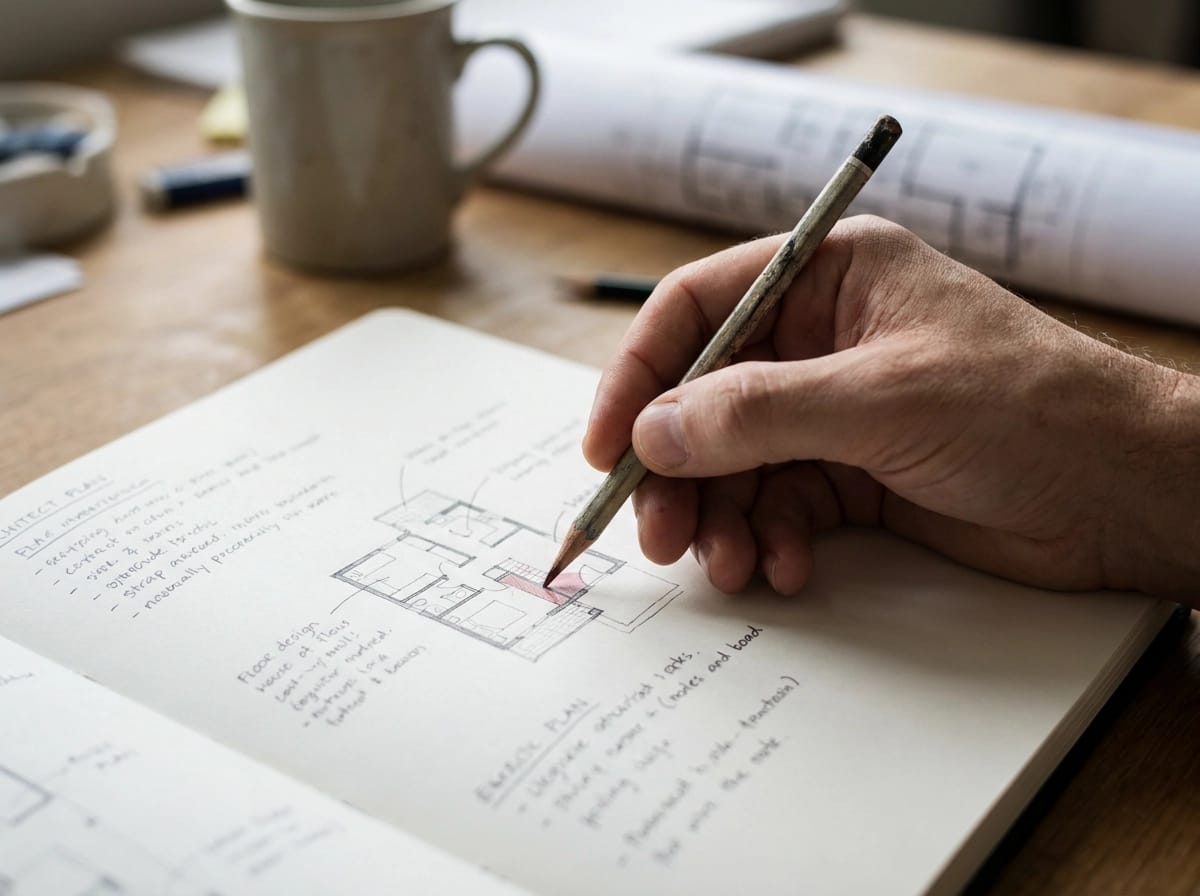
The standard being set by practice rather than mandated makes one profession-wide instinct worth defending rather than dismissing. The drive to author is why many people first wanted to hire an architect: a designed building, a clear idea, a resolved whole. Ambition is not the problem. Architecture is a process-led discipline, not mere taste, as the RIBA Plan of Work sets out.
The problem is sequence. When the idea arrives before the client’s brief is genuinely understood, the design answers a question the client never asked, however elegant the answer. Authorship earned through listening is stronger than authorship asserted through taste. A well-understood brief gives an architect more to work with, not less: constraints, priorities, routines, climate responses, budget lines.
The fear that co-design waters down design quality misreads where quality comes from. It concentrates design energy on decisions the client will actually feel, rather than dispersing it across revisions chasing a brief that was never captured. That matters most on projects where a wrong turn is expensive, such as renovating an existing home.
To be clear about the tone of this argument: it is not a case against other architects, nor against ambition. It is a case for ordering the profession’s service role above its ego role.
What Designing With Looks Like on a Regional WA Project
Put the authorship instinct to work on a real brief and the value of the room becomes plain.
On a Wheatbelt residential project, our first assumption oriented living areas west for afternoon light. In an early conversation, the clients revealed they were absent most weekdays, ran a home business, and wanted morning warmth in the rooms they actually used before eight. The plan rotated, the office moved to the coolest edge, and a smaller, better-insulated footprint replaced the original.
Regional WA punishes a decision made twice. Trades and suppliers sit hundreds of kilometres away, freight inflates every material substitution, local stock is limited, weather windows are short, and bushfire planning at the urban interface and water servicing constrain siting before aesthetics get a hearing. Designing every part of a build to work harder starts with getting the brief right, as we set out in how smart design saves construction costs before you break ground.
Office of Regional Architecture structures early engagement the same way across residential, community, commercial and heritage work: priorities, constraints and non-negotiables are captured as design inputs and tested against every option, not presented as a finished scheme for sign-off. Where the client is a committee, workshops surface competing priorities before they become variations.
The trade-off is honest. Co-design consumes deliberate front-end time, recovered mainly where it prevents redesign and costly site changes, but it does not replace detailed documentation. Judge it on whether your project can absorb that early investment.
How Co-Design Surfaces Sustainability and Budget Priorities
Those front-end conversations also reveal what a client actually values on thermal comfort, running costs, material longevity and biodiversity. A brief document rarely contains these answers; co-design draws them out.
Sustainability decisions are trade-offs, not checklists. Every choice on orientation, glazing or materials trades against budget and lifestyle. The Supply Chain Sustainability School identifies balancing stakeholder needs and cost versus value as core design challenges. A client who has weighed those trade-offs will live with the result rather than resent it.
For a practice committed to reducing carbon emissions, resource consumption and biodiversity loss, co-design is how those commitments are negotiated rather than imposed. The conversation needs a shared vocabulary: orientation and shading, glazing ratios, insulation and airtightness, rainwater and greywater, local and low-carbon materials, and landscape that supports habitat. Each is a choice where client input genuinely improves the outcome, and where the architect’s professional judgment still governs what is compliant and buildable. Our work on Why Architects Are Not Just for the Wealthy reflects the same principle: good design is shaped around real budgets and lives, not assumptions.
The budget case is strong. Carbon data often arrives after most design decisions are locked in, while cost data is refined throughout. Co-design closes that gap by settling consequential choices before they reach contract documents, which reduces expensive late changes.
What This Means for Your Project
That clarity about trade-offs is exactly what you should demand from any practice. Here is how to test whether you are being designed with rather than designed for.
Signals a practice is genuinely designing with you:
- They ask how you live or operate before showing a scheme.
- They bring options, not a single answer.
- They can explain each decision in terms of your brief.
At your first meeting, state your priorities, constraints, budget range and non-negotiables, then ask how the practice will involve you at each stage of design.
Two failure modes to avoid: treating the architect as a drafting service and handing over a finished plan to be documented, or treating the architect as an oracle and abdicating every decision. Both produce worse buildings.
Expect briefing and concept, then design development, documentation and construction support. Your leverage is greatest at briefing and concept, while orientation and layout remain open; defer a decision there and the cost rises.
A practice spanning residential, community, commercial, heritage and landscape projects, as Office of Regional Architecture does from regional Western Australia, brings that range to your brief. Regional distance, transport costs and limited local supply make early client input more valuable, not less.
Get this right, and competence has somewhere useful to go.
Competence Gets You a Building. Co-Creation Gets You Yours.
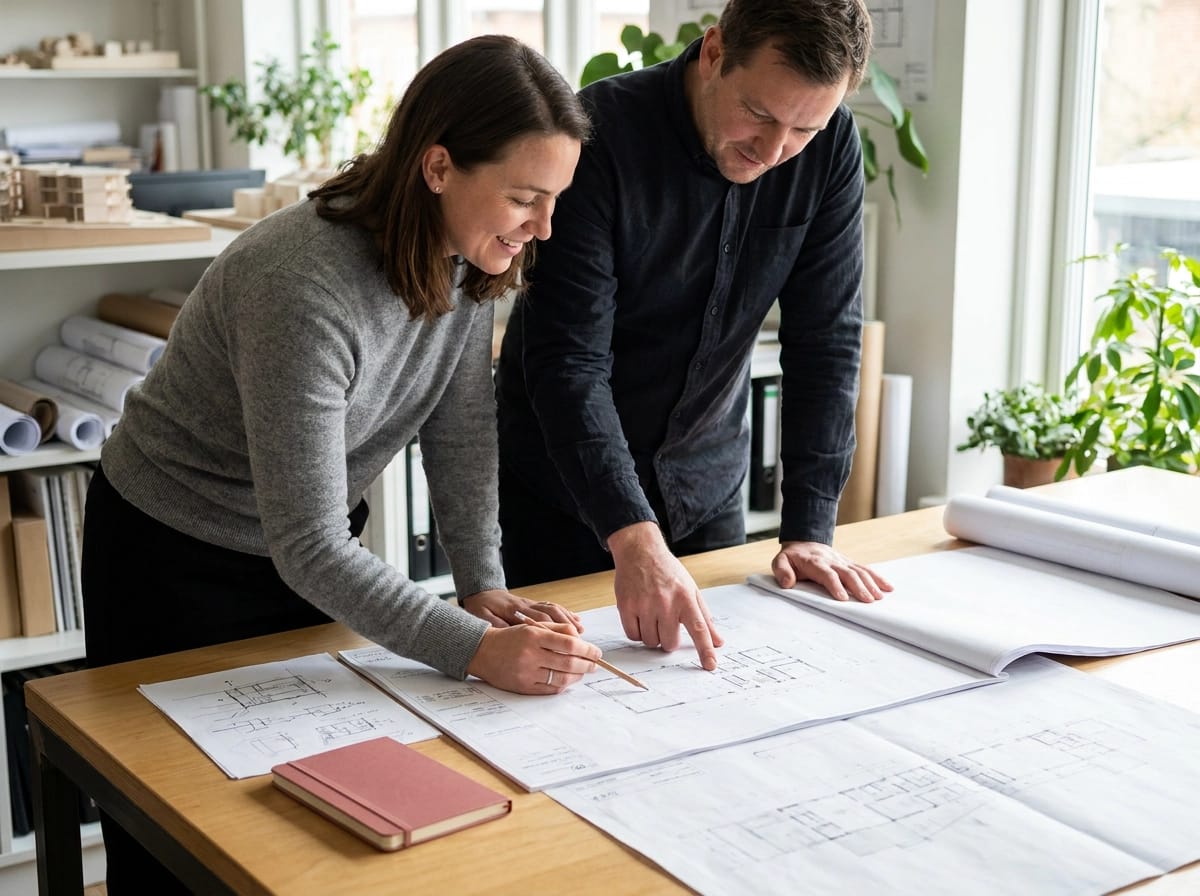
Technical competence is the floor every accredited architect stands on. What separates a good outcome from a great one is whether you were a participant in the design, not an audience to it.
Across this article, the evidence path has been consistent: co-design is documented as a discipline in peer-reviewed research and institutional settings, and while that literature comes from public health, participatory medicine and design education rather than architecture, the method transfers even when the context does not. This is not an argument against other architects, or against ambition. It is an argument for placing service ahead of artistic ego in the order of operations.
Three things to carry into your project:
- Interview your architect on process, not just portfolio. Ask them to name their stages.
- Bring your real priorities and constraints to the first meeting, not the third revision.
- At every stage, ask whose problem the current design decision is solving.
If you are planning in regional Western Australia, WA’s residential building codes will shape part of that conversation.
We would rather begin with how you want to live or operate in the building than with a design. Talk to the Office of Regional Architecture.
Conclusion
Technical competence is only the starting point. Great architecture happens when your priorities, constraints, and lived experience shape every decision, not when you receive a finished design. Co-design is a disciplined process, not a slogan. It surfaces what matters most, from sustainability goals to budget trade-offs, and keeps the work accountable to your needs.
Carry three habits into your project. Interview architects about process, not just portfolio. Bring your real priorities to the first meeting. Ask whose problem each decision solves. In regional Western Australia, let local codes inform the conversation without dictating the outcome.
If you want a building that performs well and feels genuinely yours, begin with how you want to live or operate. Talk to the Office of Regional Architecture. Competence gets you a building. Co-creation gets you yours.